
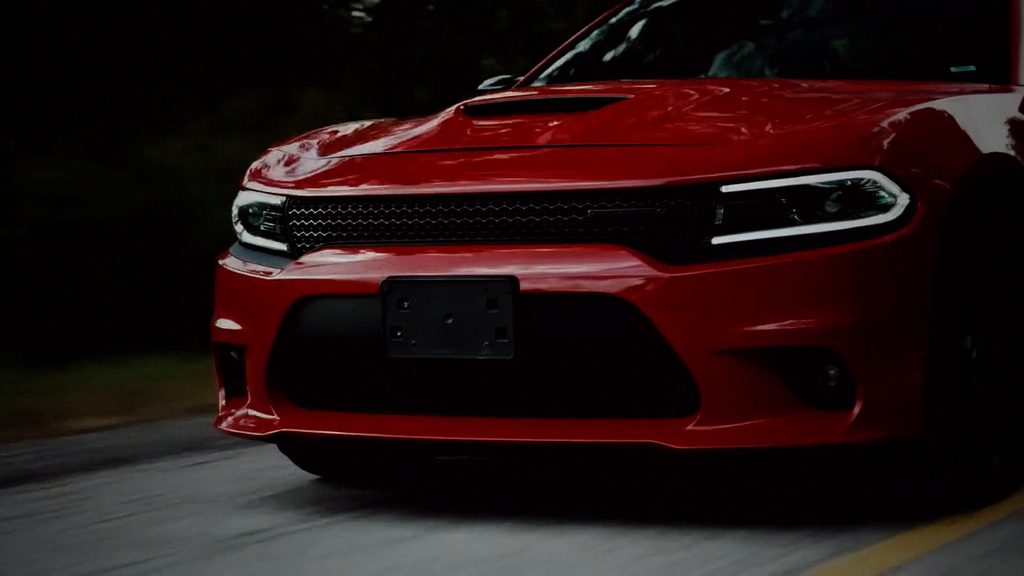
Dodge & RAM platforms
Dodge & RAM engines and gearboxes we tune
Stellantis performance cars and trucks share the Hemi family and the same 8-speed automatic, so the calibration work is well understood:
- 5.7 Hemi V8: Charger and Challenger R/T, RAM 1500 (including eTorque models), Durango and Jeep Grand Cherokee.
- 6.4 (392) Hemi V8: Charger and Challenger Scat Pack and SRT 392, Durango SRT and the RAM HD gas trucks.
- 6.2 supercharged Hemi: Charger and Challenger Hellcat and Redeye, Durango SRT Hellcat, RAM TRX and Jeep Trackhawk.
- 3.6 Pentastar V6: Charger and Challenger SXT and GT, RAM 1500 V6, in the everyday tier.
- TorqueFlite 8-speed: The 8HP45, 8HP70 and 8HP90 automatics behind almost all of them.
Not on the list? Send us the year, model and engine. If the software can be calibrated safely, we will tell you what is possible and what it costs before anything is booked.
What Stage 1, Stage 2 and TCU mean on a Dodge & RAM
Stage 1: software only
On a Hemi, a calibration sharpens the electronic throttle, refines fuelling and timing for the fuel you run, and removes some of the factory's softness in the first part of the pedal. On trucks it also covers practical settings such as speed limiters and tire size where supported.
Stage 2: built around your parts
For cars and trucks with supporting hardware such as headers, an intake, a supercharger pulley on Hellcat engines or a camshaft. The calibration is built around the parts and logged. Installs are by referral for now; we calibrate around them.
TCU: the gearbox to match
The TorqueFlite 8-speed shifts smoothly but lazily from the factory. A transmission calibration firms up shifts, sharpens kickdown and matches torque management to the engine tune, which makes a big difference on Chargers, Challengers and RAMs alike.
Dodge & RAM tuning prices
- Hemi V8 (5.7, 6.4, 6.2 supercharged): performance Stage 1: from $1,499
- 3.6 Pentastar V6: Stage 1: from $999
- Stage 2 with supporting hardware: from $1,299
- 8-speed calibration (TCU): from $999
- Stage 1 + TCU bundle: from $1,799
- Diagnostics and health scan (credited toward a tune within 30 days): from $99
Prices are in CAD and the final quote depends on your exact car, software and goal. Your original factory map is saved before anything is written, so you can always go back to stock.
Before you tune a Hemi
Most 2015-and-newer Dodge, RAM and Jeep engine computers need an unlock step before they can be tuned, and 2018-and-newer vehicles also have a security gateway. We check your VIN and software first and tell you before booking what can be done in your driveway. On Hemis we also check for misfires and lifter noise in the health scan before any calibration is written.
How a mobile Dodge & RAM tune works
- Send your car (year, model, engine, current mods and goal) or call (416) 839-2266. We confirm support for your software and quote before booking.
- We come to your home, work or driveway with professional-grade tuning and diagnostic equipment. No drop-off, no waiting room.
- Health scan and live data first. If something needs fixing, you hear it before any calibration is written.
- Factory map saved, calibration written, then a data log to confirm the result, with clear notes on what changed.
Where we come to
No travel fee across Toronto, the GTA and Barrie.
Other makes we tune
FAQ: Dodge & RAM tuning
Can you tune my Charger or RAM at home?
Yes. It is a mobile service: we come to your home, work or driveway, with no travel fee across Toronto, the GTA and Barrie.
Is the factory tune saved?
Yes. The original software is saved before anything is written, so the car or truck can go back to stock.
What does a Hemi tune cost?
Hemi V8s, from the 5.7 to the supercharged 6.2, are in the performance and V8 tier, from $1,499 for Stage 1. Pentastar V6 models start from $999.
Do you tune the 8-speed automatic?
Yes, where supported. TCU calibration is from $999, or from $1,799 bundled with Stage 1.
Do you work on Hellcats?
Yes. Supercharged Hemi cars are reviewed for model year and software first, and we log intake temperatures closely because heat is the limit on those engines.